
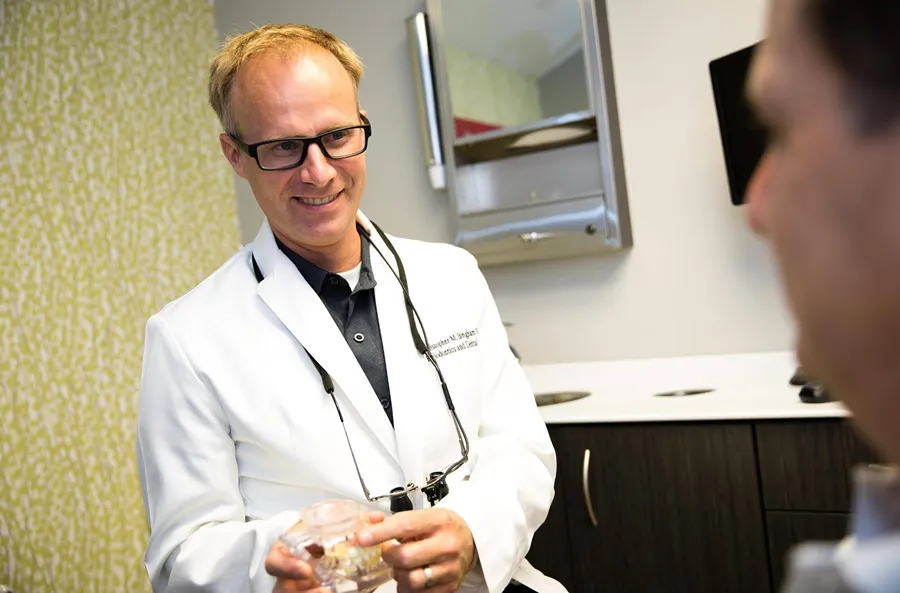
By Dr. Christopher Bingham, DDS, MS | Board-Certified Periodontist | Council Oak Perio, Austin, TX
Here's the straight answer most patients are looking for: gum disease can be cured only in its earliest stage. Gingivitis — inflammation of the gums with no bone loss yet — is reversible and can be completely resolved with professional cleaning and good home care. But once gum disease progresses to periodontitis, where the infection has destroyed bone and supporting tissue, it can no longer be cured. It can, however, be controlled and managed very effectively for the rest of your life.
That distinction matters enormously, because it changes what successful treatment looks like. For gingivitis, success means cure. For periodontitis, success means stopping the disease in its tracks and keeping it stable so you don't lose teeth. At Council Oak Perio, a Central Texas periodontics practice in Austin, Dr. Christopher Bingham, a board-certified periodontist with over 20 years of experience, is honest with every patient about which situation they're in — because realistic expectations are the foundation of good treatment.
This post explains the difference, what "managed but not cured" actually means day-to-day, and why that's genuinely good news.
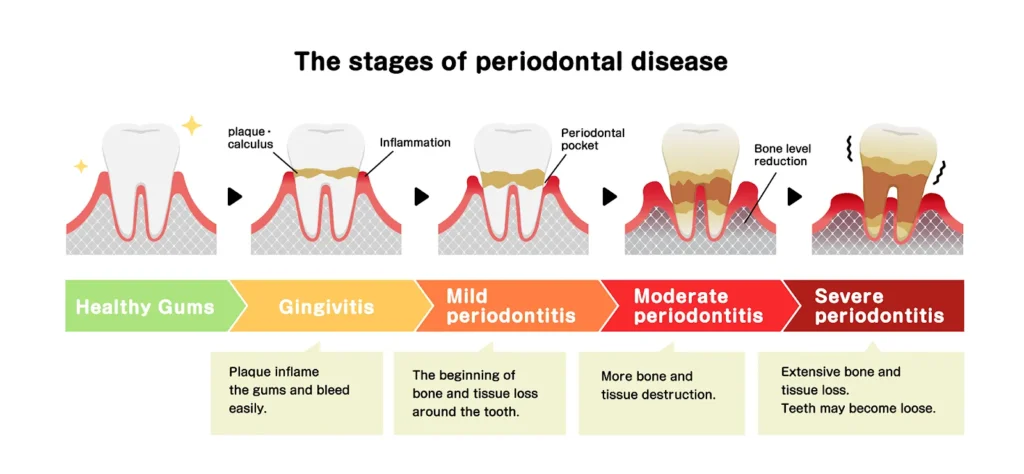
Gingivitis is the earliest and mildest form of gum disease. It's caused by plaque — a sticky film of bacteria — building up along the gumline and triggering inflammation. The signs are familiar: red, swollen, or tender gums, and bleeding when you brush or floss.
The critical feature of gingivitis is that the infection is still confined to the gum tissue. It has not yet damaged the bone or the deeper structures that hold your teeth in place. Because no permanent damage has occurred, gingivitis is fully reversible. According to the CDC, gingivitis can be largely prevented and treated with a combination of self-care and professional cleanings.
In practical terms, reversing gingivitis usually involves a thorough professional cleaning to remove the plaque and tartar driving the inflammation, followed by consistent, effective home care to keep it from returning. When that happens, the gums can return to complete health. This is the one stage where "cured" is the right word.
There's an important caveat, though: even after gingivitis resolves, you remain more susceptible to gum disease in the future. The conditions that allowed it to develop once can allow it again, which is why ongoing prevention matters even after a successful reversal.
When gingivitis is left untreated, it can advance to periodontitis. At this stage, the infection spreads below the gumline and begins destroying the bone and connective tissue that anchor your teeth. Pockets form between the teeth and gums, harboring bacteria that are impossible to remove with brushing alone. As the disease progresses, it can lead to gum recession, loose teeth, and ultimately tooth loss.
Here's why periodontitis can't be cured: the bone and tissue that have already been lost don't grow back on their own. As the Cleveland Clinic puts it plainly, you can't cure periodontal disease because once you lose the structural support around your teeth, you don't usually get it all back.
But — and this is the part that matters — periodontitis is highly manageable. Professional treatment can stop the disease from progressing, eliminate the active infection, dramatically reduce the bacterial load, and in some cases regenerate a portion of the lost bone and tissue through grafting. The goal shifts from "cure" to "control": arresting the disease and keeping it stable so you keep your teeth.
Think of it the way you'd think about a chronic but controllable condition like high blood pressure or diabetes. You don't cure it — you manage it, and with good management you live a full, healthy life. Periodontitis is the same. Managed well, it doesn't have to cost you a single tooth.
Learn more: Gum Disease Treatment at Council Oak Perio
If periodontitis is managed rather than cured, what does that management look like in practice? At our Central Texas periodontics practice, it follows a clear, structured path.
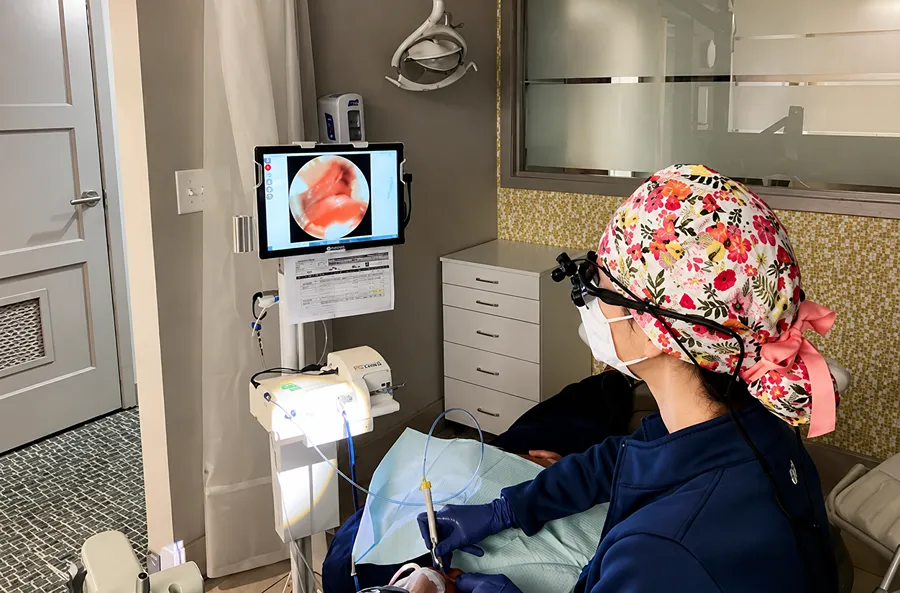
Active treatment first. The starting point is visual/endoscopic scaling and root planing (SRP) — a deep cleaning that removes plaque, tartar, and bacteria from the root surfaces below the gumline. This is the evidence-based first-line treatment for periodontitis. At Council Oak Perio, we take this further than most practices by using a dental endoscope, which lets our hygienists see below the gumline in real time as they clean, rather than working blind. This dramatically improves how completely we can remove the source of infection.
Re-evaluation. About four to six weeks after SRP, we measure whether the treatment achieved its goals — reduced bleeding, shallower pockets, healthier tissue. This step determines what comes next and is one of the most commonly skipped appointments in gum disease treatment.
Surgery, only if needed. If deep pockets remain that can't be cleaned or maintained, pocket reduction or regenerative surgery may be recommended. In some cases, bone grafting can regenerate a portion of what was lost.
Lifelong maintenance. This is the part that makes management work. Patients with a history of periodontitis need professional periodontal maintenance — typically every three months — to keep the bacteria controlled and catch any recurrence early. Skipping maintenance is the most common reason controlled gum disease comes roaring back.
Learn more about gum disease: The Cleveland Clinic: Periodontal Disease
Learn more: The 3 Phases of Periodontal Treatment at Council Oak Perio
It would be easy to hear "your gum disease can't be cured" as bad news. It isn't. Here's why.
A patient with well-managed periodontitis can keep their natural teeth for the rest of their life. The disease being "incurable" doesn't mean it's progressive or hopeless — it means it requires ongoing attention, exactly like many other manageable health conditions. The patients who lose teeth to gum disease are almost always the ones whose disease went untreated or unmonitored, not the ones who committed to a maintenance plan.
In other words, the outcome is largely within your control. With professional treatment and consistent maintenance, the trajectory of periodontitis can be flattened completely. The infection stops advancing. The bone loss halts. Your smile stays stable. That's a genuinely good outcome — and it's available to the overwhelming majority of patients who seek care.
What you can't afford to do is wait. The earlier gum disease is caught, the more tissue and bone you preserve, and the simpler the management becomes. Catching it at gingivitis means a cure. Catching it at early periodontitis means easy, stable management. Letting it advance means a harder road — still manageable, but with less to work with.
Can gum disease be completely cured?
Only in its earliest stage. Gingivitis — gum inflammation with no bone loss — is fully reversible and can be cured with professional cleaning and good home care. Once gum disease progresses to periodontitis and bone loss has occurred, it can't be cured, but it can be controlled and kept stable over the long term so you don't lose teeth.
Can gum disease go away on its own?
No. Gum disease is a bacterial infection that won't resolve without intervention. Even gingivitis, the reversible stage, requires professional cleaning and improved home care to clear. Left alone, gum disease tends to progress, not improve.
Is periodontitis reversible?
The active infection of periodontitis can be stopped, and some lost bone and tissue can sometimes be partially regenerated through grafting — but the damage already done isn't fully reversible. The realistic, achievable goal is to halt the disease and maintain stability, thereby protecting your teeth for life.
How do I keep gum disease from coming back?
Consistent professional maintenance is the key. For patients with a history of periodontitis, that usually means a periodontal maintenance visit every three months, combined with effective daily brushing and interdental cleaning at home. This routine keeps the bacteria controlled and catches any recurrence early.
Do I need a periodontist, or can my regular dentist treat gum disease?
General dentists can treat mild gum disease, but a periodontist specializes specifically in diagnosing and managing periodontal disease and the structures supporting your teeth. If you've had repeated treatment without improvement, deeper pockets, or advancing disease, a periodontist has specialized tools and techniques — including the dental endoscope — that general practices typically don't offer. Council Oak Perio provides periodontics for Central Texas patients right here in Austin.
If you've been told you have gum disease — or you've noticed bleeding, tender, or receding gums — the best thing you can do is find out exactly what stage you're in and what it will take to control it.
Dr. Christopher Bingham is a board-certified periodontist with over 20 years of experience who will give you an honest assessment and explain your real options. Not a chain. Not a franchise. Just a specialist and his team providing Central Texas periodontics, right here in Austin since 2013.
Schedule Now
📞 512-453-1600
711 W. 38th St. Suite G5 · Austin, TX 78705
This blog post has been reviewed, edited, and approved by Dr. Christopher Bingham, board-certified periodontist, Austin, Texas.
Saving teeth when we can. Replacing teeth when we must. Creating confident, healthy smiles.™