
By Dr. Christopher Bingham, DDS, MS | Board-Certified Periodontist | Council Oak Perio, Austin, TX
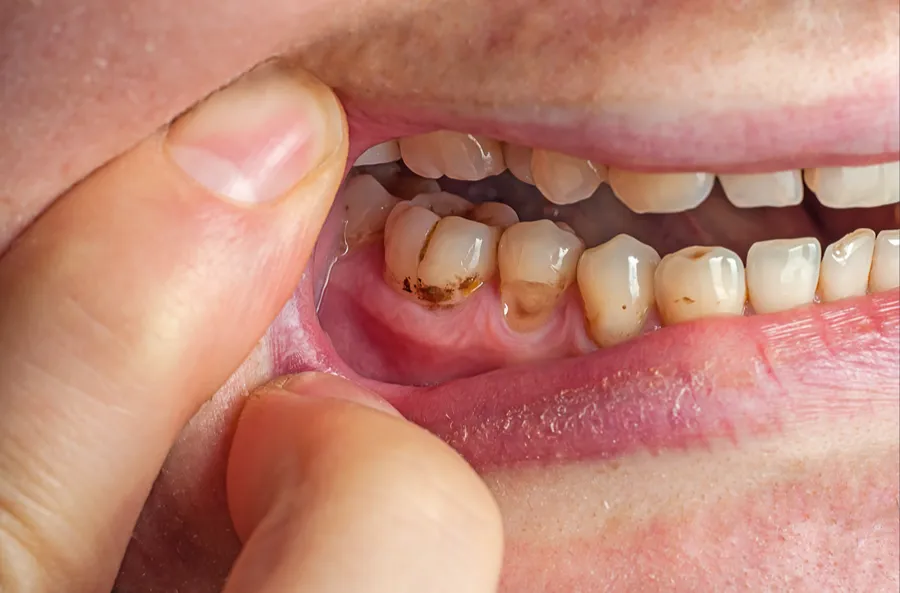
Cavities at the gum line form where the tooth meets the gum — and they're different from ordinary cavities in one crucial way: they often develop on the tooth's root surface, which has no protective enamel. When gums recede and expose the root, that softer surface becomes far more vulnerable to decay. This is why gum-line cavities tend to form faster, cause sensitivity sooner, and are best understood not just as a dental problem, but as a gum problem.
These cavities go by several names — cervical cavities, root caries, or gum-line decay — and they're caused by a combination of factors: plaque and bacteria collecting at the gum line, gum recession exposing the root, aggressive brushing, dry mouth, and diet. At Council Oak Perio in Austin, TX, Dr. Christopher Bingham, a board-certified periodontist with over 20 years of experience, sees these cavities frequently — because their most common underlying cause, gum recession, is exactly what a periodontist specializes in treating.
This post explains why gum-line cavities form, what makes them different and more urgent than typical cavities, and — most importantly — how to address the root cause so they don't keep coming back.
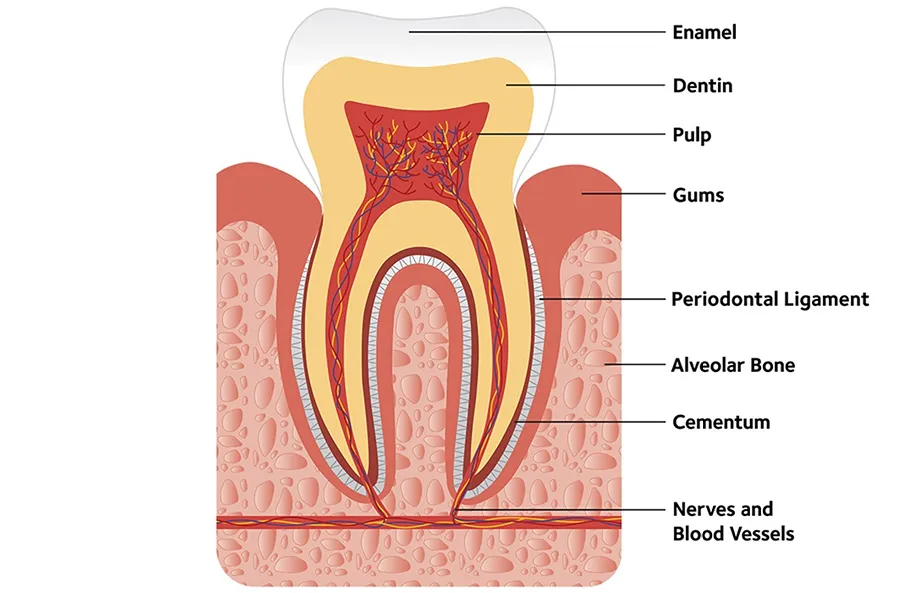
To understand gum-line cavities, it helps to understand a little tooth anatomy. The crown of your tooth — the part you normally see — is covered in enamel, the hardest substance in the human body. Enamel is built to withstand decades of chewing and acid exposure. But enamel only covers the crown. Below the gum line, the root of the tooth is covered by a much softer material called cementum, and beneath that lies dentin.
As long as your gums are healthy and sit where they should, the root stays protected beneath the gum tissue. But when the gums recede, that soft root surface becomes exposed to the mouth — and to the plaque, bacteria, and acids that cause decay. Because cementum and dentin are far softer than enamel, decay on the root surface progresses faster and more aggressively than a typical cavity on the chewing surface of a tooth.
This is the key insight most articles about gum-line cavities miss: a cavity at the gum line is very often a downstream consequence of gum recession. Treat the cavity without addressing the recession, and you've fixed the symptom while leaving the cause in place.
Learn more about Gum Recession: Gum Recession in Austin, TX
Learn more about cavities: Cleveland Clinic - Cavities
Gum-line cavities are usually multifactorial — meaning several causes work together. The most common contributors include:
The leading underlying cause. When gums pull back and expose the root surface, they create the exact conditions in which root cavities thrive. Recession itself is commonly caused by aggressive brushing, periodontal (gum) disease, aging, and genetically thin tissue.
The gum line is a natural collection point for plaque — the sticky bacterial film that produces cavity-causing acid. If brushing consistently misses the gum line, or if technique is poor, plaque accumulates precisely where the tooth is most vulnerable.
Brushing too hard does double damage here: it wears away gum tissue (causing recession that exposes the root) and can abrade the softer root surface directly. This is one of the most common patterns we see — a diligent brusher who is unknowingly causing the very problem they're trying to prevent.
Saliva naturally washes away food particles and neutralizes acid. When saliva flow is reduced — often due to medications, dehydration, or certain medical conditions — the mouth loses its protection, and the gum line becomes more prone to cavities.
Frequent consumption of sugary or acidic foods and drinks — sodas, fruit juices, candies, and even sticky starches — feeds the bacteria at the gum line and weakens the tooth surface over time.
Tobacco reduces saliva flow, weakens the immune response, and contributes to gum disease and recession — all of which raise the risk of gum-line decay.
Gum-line cavities differ from ordinary cavities in several important ways, and each one is a reason to take them seriously:
Left untreated, gum-line cavities can lead to nerve involvement, infection, and ultimately tooth loss. Because they move quickly, early detection genuinely matters.
The cavity itself is treated much like any other cavity: the decayed tissue is removed, and the area is restored with a filling. For gum-line cavities specifically, a tooth-colored filling material is used, and certain materials (such as glass ionomer) are often preferred because they bond well in this moisture-prone area near the gum.
But here's where a periodontist's perspective matters. If the cavity formed because of gum recession, filling it is only half the job. The exposed root that allowed the cavity to form is still exposed — and still vulnerable to new decay, sensitivity, and further problems. This is why, in many cases, the more complete solution involves addressing the recession itself.
A gum graft can cover the exposed root, protecting it from future decay, eliminating the sensitivity, and restoring the gumline. For patients who keep developing decay and sensitivity at the gum line, treating the recession — not just repeatedly filling the cavities — is often what finally breaks the cycle.
This is the difference between treating a gum-line cavity as an isolated event and treating it as what it usually is: a sign that the gums need attention.
Learn more: Gum Recession Treatment: Every Option Explained
Prevention comes down to protecting the gum line and, wherever possible, preventing the recession that exposes the root in the first place:
What causes cavities at the gum line?
Gum-line cavities form when plaque and bacteria collect where the tooth meets the gum and produce acid that decays the tooth. They're strongly associated with gum recession, which exposes the softer root surface. Aggressive brushing, dry mouth, a sugary or acidic diet, and tobacco use all increase the risk.
Are gum-line cavities more serious than regular cavities?
In some ways, yes. Because they often form on the root surface, which lacks protective enamel, they progress faster and sit closer to the tooth's nerve than cavities on the chewing surface. This means they can become serious more quickly, which is why early detection and treatment are especially important.
Is a dark spot at my gum line always a cavity?
Not always. A dark or brown area along the gum line can be due to decay, but it can also be tartar (hardened plaque) or staining from coffee, tea, or tobacco. Decay is usually soft or rough and may worsen over time, while tartar is hard. Because it's difficult to tell the difference on your own, it's best to have it evaluated by a professional.
Can a gum-line cavity be reversed?
Only in its very earliest stage. If caught as early demineralization — before an actual hole has formed — a fluoride treatment can sometimes strengthen the surface and stop it from progressing. Once a cavity has actually formed, it needs to be cleaned out and filled; it won't heal on its own.
Why do I keep getting cavities at my gum line?
Recurring gum-line cavities are often a sign of an underlying issue that hasn't been addressed — most commonly gum recession that leaves the root surface exposed. If you keep developing decay in the same area, it's worth seeing a periodontist to evaluate whether treating the recession (for example, with a gum graft) would protect the tooth and break the cycle.
If you've noticed decay, dark spots, sensitivity, or a notch at your gum line — or you keep getting cavities in the same area — it's worth finding out whether gum recession is the underlying cause.
Dr. Christopher Bingham is a board-certified periodontist with over 20 years of experience who looks beyond the cavity to the reason it formed. Not a chain. Not a franchise. Just a specialist and his team, right here in Central Austin since 2013.
Schedule Now
📞 512-453-1600
711 W. 38th St. Suite G5 · Austin, TX 78705
This blog post has been reviewed, edited, and approved by Dr. Christopher Bingham, board-certified periodontist, Austin, Texas.
Saving teeth when we can. Replacing teeth when we must. Creating confident, healthy smiles.™