
By Dr. Christopher Bingham, DDS, MS | Board-Certified Periodontist | Council Oak Perio, Austin, TX
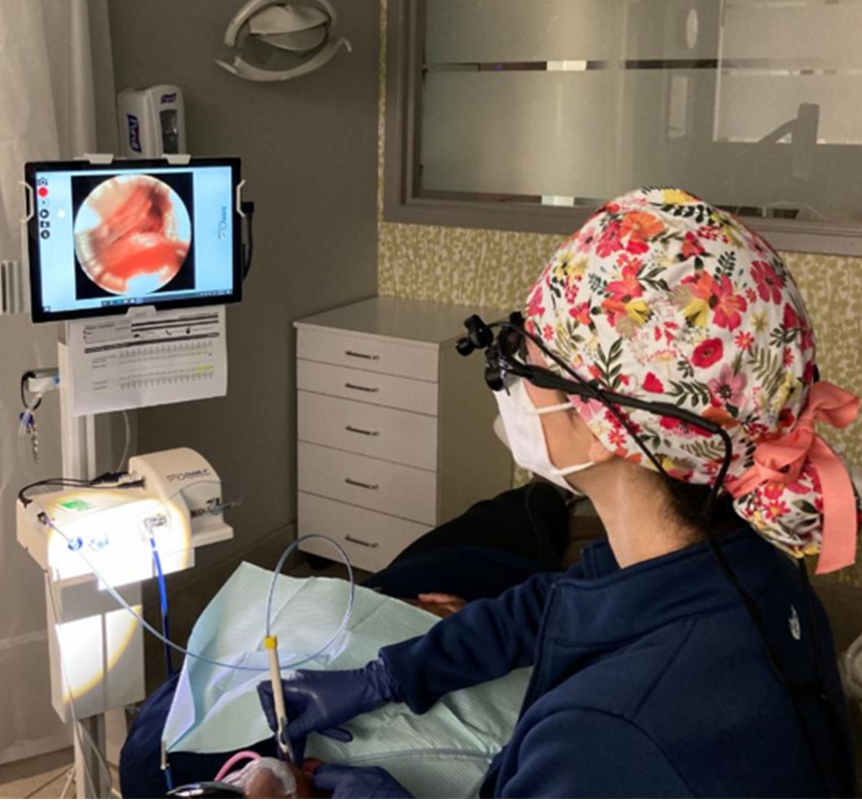
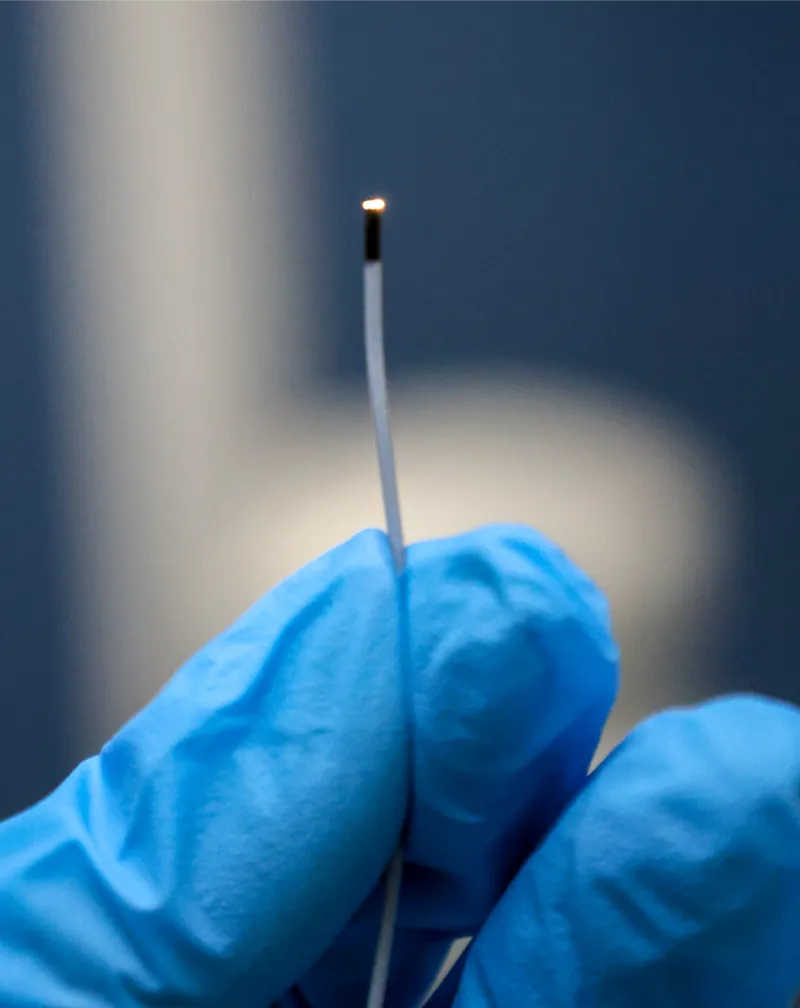
A dental endoscope is a tiny camera that lets your hygienist see beneath the gumline in real time while cleaning your teeth. It is roughly one millimeter wide, threads gently into the space between the tooth and gum, and displays a magnified, live image of the root surface on a monitor. For the first time, the person cleaning your teeth can see exactly what they are cleaning.
This matters because traditional gum disease treatment is done blind. Without a camera, a hygienist relies on touch alone to find and remove the hardened bacteria below the gumline. The endoscope replaces that guesswork with sight. At Council Oak Perio in Austin, TX, Dr. Christopher Bingham has used this technology for years, and it has changed how completely we can treat gum disease, how often patients heal without surgery, and how confident we can be that the job is done.
This post explains what a dental endoscope is, how it works, and why seeing below the gumline produces better results than working blind.
To understand why the endoscope matters, you have to understand the problem it solves.
Gum disease is a bacterial infection. The bacteria live in plaque and hardened tartar (calculus) on the root surfaces below your gumline, inside pockets that form between the tooth and gum. The standard treatment, scaling and root planing (SRP), removes that calculus and bacteria so the gums can heal.
The difficulty is that all of this happens where no one can see. In conventional SRP, the hygienist works entirely by feel, sliding instruments below the gumline and detecting tartar by touch. Skilled clinicians do this well, but the deeper the pocket, the harder the task. At a pocket depth of five millimeters, traditional SRP removes only a fraction of the tartar present. Deposits get missed. The bacteria they harbor keep the gums inflamed. The patient keeps bleeding, keeps returning, and keeps wondering why the cleaning never quite works.
The problem was never effort or skill. The problem was working in the dark.
Learn more: Why Do My Gums Keep Bleeding After Every Cleaning?
The dental endoscope is a slender fiber-optic camera, a millimeter in diameter, attached to a specialized dental instrument called an explorer. Bundled inside that fiber are thousands of tiny glass strands: some carry light down to the root surface, and others carry the image back up to a monitor.
The hygienist guides the camera gently into the pocket between the tooth and gum, alongside the cleaning instrument. On the screen, the root surface appears magnified 24 to 48 times its actual size. Tartar that would be invisible and detectable only by touch is now plainly visible: every deposit, every ledge, every rough spot where bacteria hide.
With the endoscope, the hygienist sees the root surface in real time as she works. The camera becomes her eyes below the gumline, showing her every deposit as she removes it and confirming the surface is clean as she goes. Nothing is left to assumption. When the root surface looks clean under high magnification, it is clean.
Learning this skill takes time and practice. Working two instruments in coordination while reading a magnified image demands real expertise, which is one reason the endoscope remains uncommon. Most dental offices do not have one, and fewer still have used one long enough to swdefrgthymaster it.
Learn more: Visual SRP: Using dental endoscopes to reduce the need for pocket reduction surgery
The difference between guessing and seeing shows up directly in patient results.
More complete tartar removal. Research shows that adding the endoscope to scaling and root planing improves how thoroughly calculus is removed from root surfaces. When the clinician can see the deposit, the clinician can remove it all.
Less need for surgery. When the source of infection is completely removed, the gums often reattach to the clean root surface on their own. The pocket shrinks. The inflammation resolves. This natural healing reduces or eliminates the need for gum surgery in many pockets that would otherwise require it. At Council Oak Perio, adding the endoscope has cut the number of patients needing pocket reduction surgery by nearly half.
Better diagnosis. The endoscope reveals more than tartar. Under magnification, it can expose cracked teeth, root damage, and other problems that would otherwise remain hidden or require surgery to find.
Confidence that the work is done. Perhaps the greatest benefit is certainty. Instead of hoping a pocket is clean, the clinician confirms it. That confidence is something blind treatment can never offer.
Everything the endoscope does serves one principle: the body wants to heal. Given the chance, it usually will.
Gum tissue stays inflamed for one reason: bacteria remain on the root surface, triggering the immune system. Remove every trace of that bacteria, and the inflammation has nothing left to fight. The tissue calms. The gums tighten back against the clean root. The pocket that harbored disease begins to close.
This is why the endoscope produces such durable results. It does not force healing through more aggressive treatment. It removes the obstacle to healing, then lets the body do what it already knows how to do. Seeing the root surface completely and cleaning it completely is what makes that possible.
Learn more: The 3 Phases of Periodontal Treatment
What is a dental endoscope used for?
A dental endoscope lets a hygienist or periodontist see beneath the gumline in real time, mainly during the treatment of gum disease. It provides a magnified, live view of the root surface so that tartar and bacteria can be located and removed completely, rather than by touch alone. The same visualization also helps detect cracks and other root-surface problems.
Is treatment with a dental endoscope painful?
No. The endoscope adds visualization to a standard scaling and root planing procedure; it does not make the procedure more invasive. Treatment is performed with local anesthesia for comfort, and because the endoscope allows thorough non-surgical cleaning, it often spares patients the more involved recovery of gum surgery.
Does the endoscope replace gum surgery?
Often, yes. When the endoscope allows complete removal of infection from a pocket, the gums frequently heal and reattach on their own, which reduces or eliminates the need for surgery in many cases. Some advanced cases still require surgical treatment, but the endoscope lets us resolve many that once would have.
Why don't most dentists use a dental endoscope?
The equipment is specialized, and the skill takes considerable time to master. Working the camera and cleaning instrument together while reading a magnified image is difficult, so the technology remains uncommon. Council Oak Perio has used the dental endoscope for years, giving our team a level of experience few practices in Austin can match.
Can the dental endoscope help if my past deep cleanings didn't work?
Frequently, yes. Repeated deep cleanings that fail to resolve gum disease often leave tartar behind on surfaces a blind procedure could not reach. Because the endoscope reveals and removes those hidden deposits, many patients who cycled through unsuccessful cleanings begin healing after their first visual treatment.
If your gums keep bleeding, or past deep cleanings have not resolved your gum disease, you deserve treatment done with sight rather than guesswork.
Dr. Christopher Bingham is a board-certified periodontist with over 20 years of experience and years of expertise with the dental endoscope. Not a chain. Not a franchise. Just a specialist and his team, right here in Central Austin since 2013.
📞 512-453-1600
711 W. 38th St. Suite G5 · Austin, TX 78705
This blog post has been reviewed, edited, and approved by Dr. Christopher Bingham, board-certified periodontist, Austin, Texas.
Saving teeth when we can. Replacing teeth when we must. Creating confident, healthy smiles.