By Dr. Christopher Bingham, DDS, MS | Board-Certified Periodontist | Council Oak Perio, Austin, TX
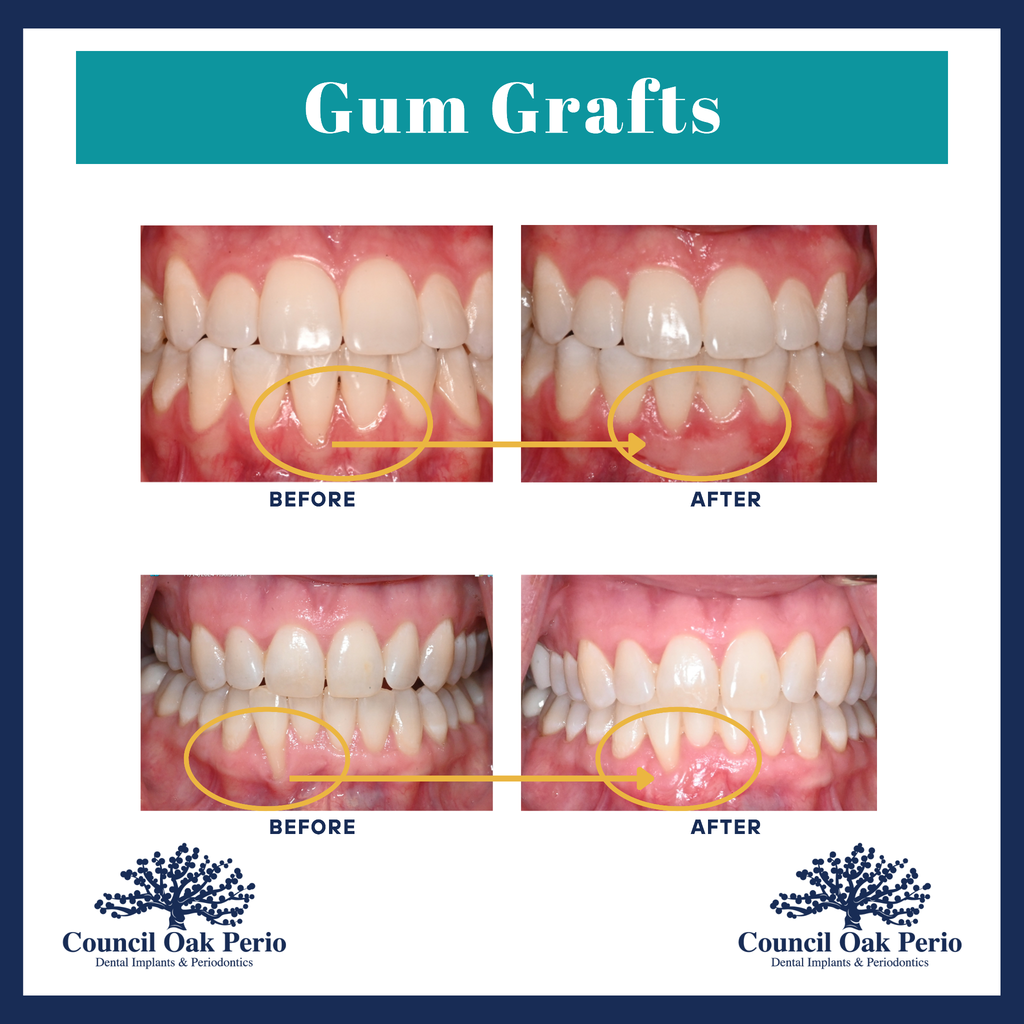
A connective tissue graft and a free gingival graft both take tissue from the roof of your mouth and place it at the gumline, but they solve different problems. A connective tissue graft covers an exposed root and thickens the tissue over it. A gingival graft builds a wider, stronger band of durable gum where there isn't enough.
Put simply: if the goal is covering an exposed root and matching the surrounding gum, the connective tissue graft is the answer. If the goal is creating tough, attached tissue that resists further recession, the gingival graft often serves better. At Council Oak Perio in Austin, TX, Dr. Christopher Bingham, a board-certified periodontist with over 20 years of experience, chooses between them based on what your specific site needs, not on a single default technique.
This post explains how each graft works, what it accomplishes, and how we choose.
The connective tissue graft is the most common soft tissue graft and the benchmark for root coverage.
How it works. Dr. Bingham makes a small opening in the roof of the mouth, takes tissue from beneath the surface layer, and then closes the palate over the site. That tissue is tucked between the bone and the overlying gum at the recession site, and the existing gum is advanced up over it to hold it in place. The graft sits sandwiched under living tissue, which feeds it a rich blood supply from both sides.
What it accomplishes. It does two jobs at once. It covers the exposed root and thickens the tissue over it so the area resists receding again. Combined with a coronally advanced flap, it produces the most predictable root coverage available.
Why the appearance is better. Because the graft is covered by your own gum tissue, the final result blends with the teeth around it. Research comparing the two techniques consistently finds better color match with the connective tissue graft. In the front of the mouth, where appearance matters most, that difference decides the choice.
What it requires. Enough palatal tissue thickness to harvest from beneath the surface. When the palate is thin, Dr. Bingham has other options.
The free gingival graft is the older of the two techniques and remains the better tool for a specific job.
How it works. Rather than taking tissue from beneath the palate's surface, Dr. Bingham takes a full-thickness piece of surface tissue, including its tough outer layer. That graft is placed directly onto the prepared site at the gumline, on the outer surface of the gum rather than tucked beneath it.
What it accomplishes. It reliably builds keratinized tissue, the firm, durable gum that binds tightly to the tooth and bone and resists the pull of the lip and cheek. When a tooth has almost no attached gum left, this graft creates a stable band of it. That band is what prevents the area from receding further.
Where Dr. Bingham uses it. Most often in the lower front region of the mouth. Teeth there often have thin, fragile tissue and a shallow vestibule, so a strong attached band matters more than a perfect color match.
The tradeoffs. Because the graft carries its own surface layer and is not covered by your gum, it heals as a visible patch that often differs in color from the tissue around it. It also achieves less predictable root coverage than the connective tissue graft. For the front of the smile, those tradeoffs usually rule it out. For building durable tissue where the gum is failing, they are worth it.
| Connective tissue graft | Free Gingival graft | |
| Primary goal | Cover the exposed root | Build durable attached tissue |
| Tissue taken | From beneath the palate's surface | The palate's surface layer itself |
| Placement | Tucked beneath your existing gum | Directly onto the gumline surface |
| Root coverage | Most predictable available | Less predictable |
| Color match | Blends with surrounding gum | Often heals as a visible patch |
| Typically used | Anywhere, especially the smile zone | Often the lower front region |
Neither graft is better. The right one depends on what your site needs, and Dr. Bingham weighs several findings before deciding.
How much root is exposed, and does it need covering? Significant exposed root with sensitivity or decay risk points toward the connective tissue graft.
How much attached tissue remains? When a tooth has almost no firm, attached gum left, building that band becomes the priority, and the free gingival graft does it reliably.
Where is the tooth? In the smile zone, color match matters. In the lower front, durability usually matters more.
How thick is your palate? Harvesting connective tissue from beneath the surface requires adequate thickness. A thin palate changes the plan.
How many teeth need treatment? Extensive treatment across many teeth may call for donor graft material instead, which avoids taking tissue from your own palate altogether.
Often the honest answer is a combination. A patient may need root coverage on the upper front teeth and a stronger tissue band on the lower front, which means both techniques in the same mouth. Matching the technique to the site is the work.
Learn more: Gum Recession Treatment: Every Option Explained
Some patients need many teeth treated. Others would simply rather avoid a wound on the palate. For them, Dr. Bingham can use carefully processed donor graft material instead of harvesting your own tissue.
The donor material acts as a scaffold that your own cells populate and, over time, convert into your tissue. It can produce excellent results and removes the second surgical site entirely, which is often the hardest part of recovery. When treatment spans many teeth, this is often the better path.
Learn more: Gum Graft Surgery at Council Oak Perio
Whichever technique your case calls for, the palate donor site drives most of the discomfort in graft recovery. Dr. Bingham addresses it directly.
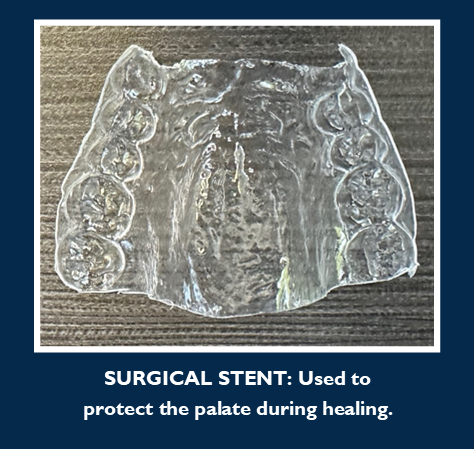
He places platelet-rich fibrin, concentrated from a small sample of your own blood, at the donor site to speed healing and control bleeding. He also provides a custom clear stent that shields the palate from your tongue and food through the first two weeks of healing, with the front teeth left open so nothing shows when you smile. Sedation is available for patients who feel anxious about the procedure.
Learn more: Gum Graft Recovery: A Day-by-Day Guide
What is the difference between a connective tissue graft and a free gingival graft? A connective tissue graft takes tissue from beneath the palate's surface and tucks it under your existing gum to cover an exposed root. A free gingival graft takes surface tissue from the palate and places it directly on the gumline to build a firm, attached band of gum. The first prioritizes root coverage and appearance; the second prioritizes durable tissue.
Which graft is better? Neither. They do different jobs. The connective tissue graft is the standard for covering exposed roots with a natural color match. The gingival graft is the better choice when a tooth lacks the firm attached tissue it needs to stop receding. The right graft is the one matched to your site.
Will a gingival graft look different from my other gums? Often, yes. Because the graft keeps its own surface layer and is not covered by your gum, it can heal as a lighter patch that does not match perfectly. This is why Dr. Bingham typically reserves it for areas outside the visible smile zone, most often the lower front, where a durable band of tissue matters more than the color.
Can I have both types of grafts? Yes, and some patients do. Different sites in the same mouth can need different things, such as root coverage on the upper front teeth and stronger attached tissue on the lower front. Dr. Bingham plans each site according to what it needs.
Can I avoid having tissue taken from my palate? Often, yes. Dr. Bingham can use processed donor graft material instead of your own tissue, which eliminates the need to harvest from the palate. This is a common choice when many teeth need treatment or when a patient prefers to avoid a second surgical site.
Jennifer’s Gum Grafting Transformation
Learn more: Cleveland Clinic — Gum Graft Surgery
If you have been told you need a gum graft, you deserve to understand which technique your case calls for and why.
Dr. Christopher Bingham is a board-certified periodontist with over 20 years of experience who matches the technique to the tooth rather than applying one approach to every case. Not a chain. Not a franchise. Just a specialist and his team, right here in Central Austin since 2013.
📞 512-453-1600
711 W. 38th St. Suite G5 ·
Austin, TX 78705
This blog post has been reviewed, edited, and approved by Dr. Christopher Bingham, board-certified periodontist, Austin, Texas.
Saving teeth when we can. Replacing teeth when we must. Creating confident, healthy smiles.™